
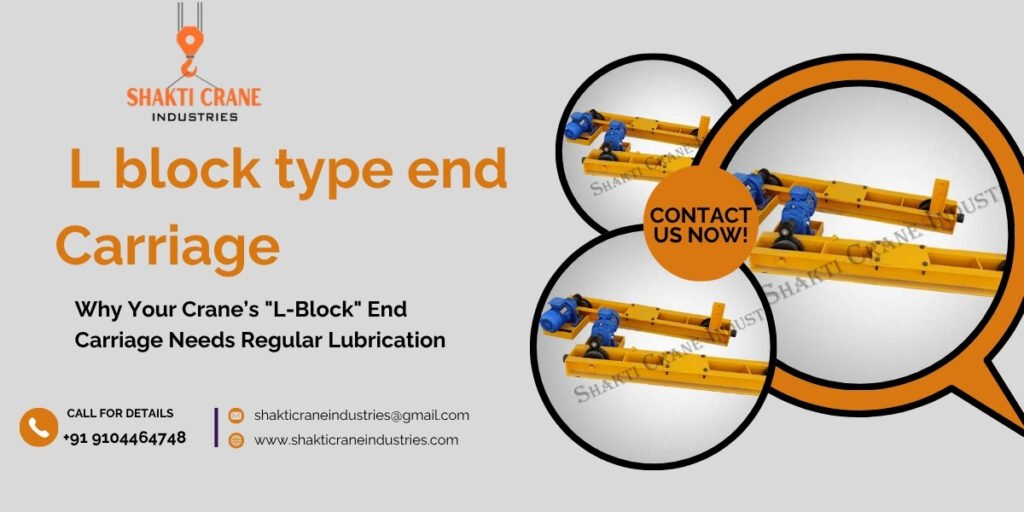
In the structural design of an EOT Crane, the End Carriage is the component that allows the entire bridge to travel smoothly along your factory rails. Specifically, the “L-Block” type end carriage is a popular, robust design used for its durability and ease of wheel maintenance.
However, many facility managers overlook the lubrication requirements of these units. At Shakti Crane Industries, we see that 70% of “travel issues”—such as jerky movement or loud grinding noises—are caused by poor lubrication in the end carriage assembly.
What is an L-Block End Carriage?
The L-block design allows for easy removal of the crane wheels without having to dismantle the entire end carriage. Because the wheels and bearings are exposed to high pressure and movement, they require consistent lubrication to function at peak efficiency.
Why Lubrication is Critical
Reducing Friction: Without proper grease, the metal-on-metal contact between the wheel bearings and the axle creates immense friction, leading to overheating.
Preventing Rail Wear: If the end carriage bearings are stiff, the crane won’t move in a straight line. This “crabbing” effect causes the crane wheels to grind against the sides of the rails, causing expensive damage to both the crane and your building structure.
Corrosion Protection: In humid or dusty industrial environments, high-quality grease acts as a seal, keeping moisture and metal dust out of the bearing assembly.
The Maintenance Checklist
Use the Right Grease: Always use the high-temperature, pressure-resistant lithium-based grease recommended in your crane manual. Avoid generic or low-quality lubricants.
Check the Seals: Inspect the bearing seals for cracks. If the seal is broken, grease will leak out, and contaminants will enter the assembly.
Frequency: For standard duty cycles, inspect and re-grease every 3–6 months. If your crane operates in a high-dust environment (like cement or metal plants), this should be done monthly.
Check for “Play”: While lubricating, check if there is any “play” or wobbling in the wheel. If the wheel feels loose, the bearing might already be damaged.
When to Call the Professionals
If you notice that your crane travels unevenly, makes a “screeching” sound, or requires frequent lubrication, your bearings may already be compromised. Replacing a bearing is cheap; replacing a collapsed L-block assembly or a damaged rail is not.
Need Help with Your Crane Maintenance?
Proper lubrication is the cheapest form of insurance for your factory equipment. If you are struggling with crane travel issues or need a routine inspection, our engineering team is here to help.